What Is the Best Office Chair for Tall People?
In the $100–500 band, the best office chair for tall people is the FlexiSpot C7, because it pairs seat-depth adjustment — the spec tall sitters need most — with 4D adjustable arms, adjustable lumbar, a synchro-tilt mechanism, and a Class 4 cylinder.
Runners-up: the Autonomous ErgoChair Pro (adjustable headrest + seat-depth adjustment on the Pro trim) and the Steelcase Series 1 (premium; optional seat-depth adjustment and a manufacturer weight rating up to 400 lb). No prices or star ratings here — use the Amazon buttons for current pricing.
Check FlexiSpot C7 on Amazon →Check Autonomous ErgoChair Pro on Amazon →
Not deciding today? Add it to your cart over there — Amazon keeps it saved (and flags any price change) until you're ready.
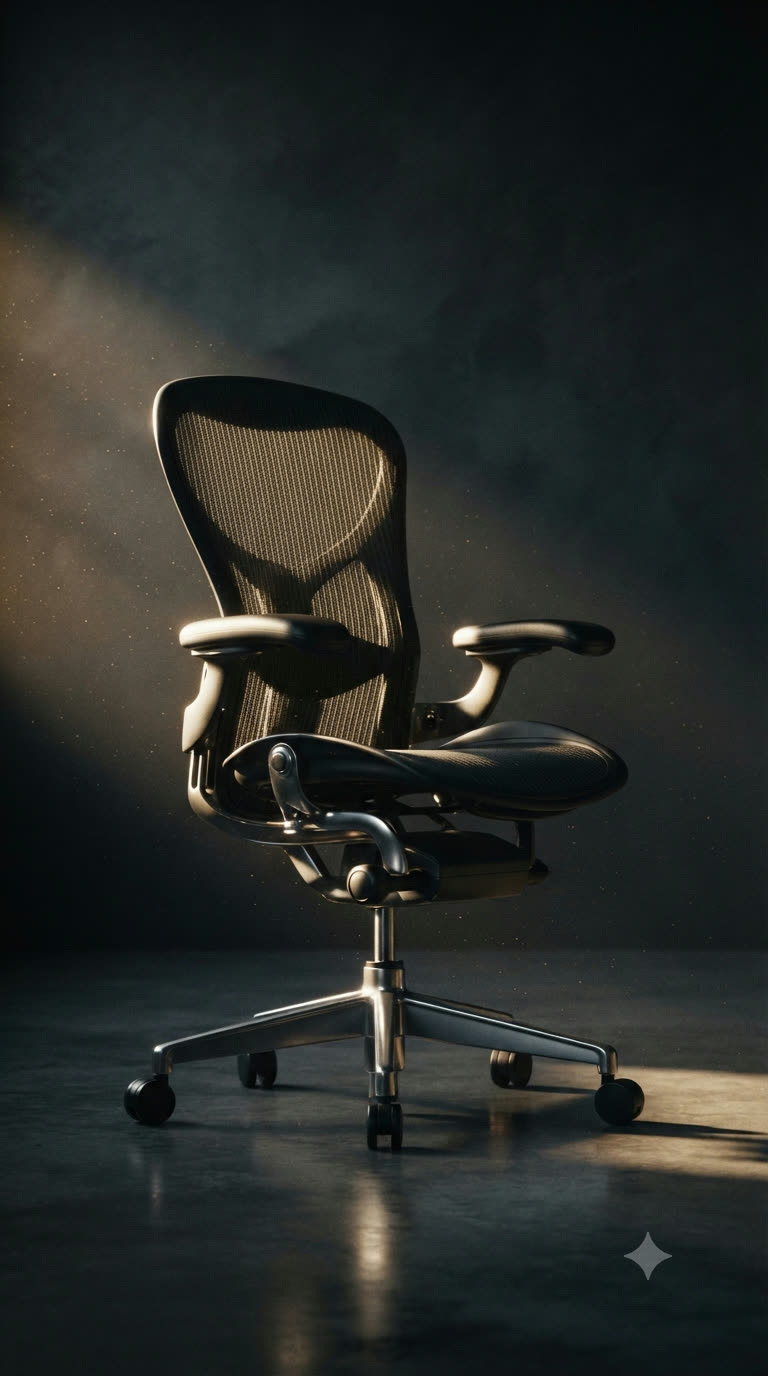
Tall buyers get failed by mid-tier chairs in one specific way: a fixed, too-shallow seat pan that ends mid-thigh. Seat-depth adjustment fixes exactly that — it slides the seat pan forward or back so you can set the gap between the seat's front edge and the back of your knees for your leg length. Many chairs in the $100–500 band omit it entirely, which is why our tall-sitter picks are filtered on that spec first, then on headrest and arm adjustability, cylinder class, and warranty. We report manufacturer specifications only — comfort and fit are personal, and how we rank is documented in how we evaluate.
The one thing to know: Seat-depth adjustment is the most-skipped spec, and it matters more than most buyers realize. It slides the seat pan forward or back so you can set the gap between the front edge of the seat and the back of your knees for your leg length. Too deep and short-legged sitters perch forward, losing the backrest; too shallow and tall sitters get no thigh support. Many mid-tier chairs omit it entirely — so if you're notably tall or short, treat seat-depth adjustment as a primary filter, not a bonus.
The picks for tall sitters
FlexiSpot C7
Mesh or upholstered back (by trim) · synchro-tilt with multi-position lock · adjustable lumbar · 4D adjustable arms · seat-depth adjustment · adjustable headrest (some trims) · Class 4 cylinder · manufacturer weight rating up to 300 lb · limited warranty
Hits the full adjustability checklist for the band — synchro-tilt, 4D arms, adjustable lumbar, and seat-depth adjustment — which makes it one of the easiest chairs here to fit to an individual body.
Best for: Buyers who specifically want seat-depth adjustment and 4D arms without going premium
Watch out: The many mechanisms mean a longer, fiddlier assembly, and trims differ (mesh vs upholstered, headrest or not). Confirm the exact configuration's adjustments on the current listing.
Check price on AmazonNot deciding today? Add it to your cart over there — Amazon keeps it saved (and flags any price change) until you're ready.
Autonomous ErgoChair Pro
Mesh back · reclining tilt with multiple lock positions + tension · adjustable lumbar · adjustable headrest · adjustable arms · seat-depth adjustment on Pro trim · Class 4 cylinder · manufacturer weight rating up to 300 lb · limited warranty (commonly ~2 years)
One of the few chairs in the band bundling adjustable lumbar, adjustable headrest, and seat-depth adjustment together — a lot of adjustment points for the money if you want to fine-tune fit.
Best for: Taller or fit-particular buyers who want a headrest plus seat-depth adjustment without leaving the mid band
Watch out: The warranty is shorter than the contract-brand picks (commonly around 2 years), and assembly is more involved than average — plan for a longer build. Confirm the trim (Core vs Pro) since adjustments differ.
Check price on AmazonNot deciding today? Add it to your cart over there — Amazon keeps it saved (and flags any price change) until you're ready.
Steelcase Series 1
Mesh back · integrated LiveBack recline with adjustable tension · optional adjustable lumbar · optional seat-depth adjustment · height-adjustable arms (4D optional) · Class 4 gas cylinder · manufacturer weight rating up to 400 lb · up to 12-year limited warranty
The warranty tells the story: a contract-grade chair with an up-to-12-year limited warranty, a real weight-activated recline mechanism, and Steelcase's parts/service network — the clearest example of warranty length as a durability signal in this band.
Best for: Buyers who want a genuine contract-furniture chair and are willing to spend near the top of the band for long-term durability
Watch out: It is bare at base price — adjustable lumbar, 4D arms, and seat-depth adjustment are often paid add-ons, and a fully-optioned Series 1 can push past $500 and out of this band. Confirm exactly which adjustments your chosen configuration includes before buying.
Check price on AmazonNot deciding today? Add it to your cart over there — Amazon keeps it saved (and flags any price change) until you're ready.
How to read the spec sheet if you're tall
- Seat-depth adjustment first. Treat it as a primary filter, not a bonus — too shallow and you get no thigh support.
- Weight rating is a manufacturer number. A chair's weight capacity is always a manufacturer rating, not an independently verified limit, and it bundles several assumptions (even weight distribution, normal use). Most mid-tier chairs are rated up to about 250–300 lb, with some rated to 400 lb; the rating is tied to the frame, base, and especially the gas cylinder class. If you're near a chair's rated limit, size up a tier or look specifically for a big-and-tall model with a higher stated rating and a Class 4 cylinder rather than trusting a borderline number.
- Armrest directions matter for long forearms. 1D arms adjust height only; 4D arms add width, depth, and pivot so the support can actually reach where your forearms land.
- Cylinder class. The gas cylinder that raises and lowers the seat is graded by a BIFMA/DIN class, and it's a spec almost nobody checks. Class 3 and Class 4 cylinders are the office-chair grades; Class 4 is the more robust and is what better mid-tier and contract chairs use, while very cheap chairs may ship a Class 2 or unmarked cylinder. A failing or slowly-sinking chair is very often just a worn cylinder — and because cylinders are a standardized part, a sinking chair can usually be fixed with an inexpensive replacement rather than a whole new chair.
Frequently Asked Questions
In the $100–500 band, the best office chair for tall people is the FlexiSpot C7, because it pairs seat-depth adjustment — the spec tall sitters need most, since a too-shallow seat leaves long thighs unsupported — with 4D adjustable arms, adjustable lumbar, a synchro-tilt mechanism, and a Class 4 cylinder. The Autonomous ErgoChair Pro adds an adjustable headrest plus seat-depth adjustment on the Pro trim, and the Steelcase Series 1 is the premium option with optional seat-depth adjustment and a manufacturer weight rating up to 400 lb.
Seat-depth adjustment is the most-skipped spec, and it matters more than most buyers realize. It slides the seat pan forward or back so you can set the gap between the front edge of the seat and the back of your knees for your leg length. Too deep and short-legged sitters perch forward, losing the backrest; too shallow and tall sitters get no thigh support. Many mid-tier chairs omit it entirely — so if you're notably tall or short, treat seat-depth adjustment as a primary filter, not a bonus.
It's a fit preference, not a requirement. An adjustable headrest gives a tall sitter somewhere to rest the head during reclined breaks, and because it adjusts, it can be set high enough to actually meet a taller torso — a fixed headrest often sits too low. Among our picks, the Autonomous ErgoChair Pro includes an adjustable headrest, and some FlexiSpot C7 trims offer one; confirm the exact trim's adjustments on the current listing.
A chair's weight capacity is always a manufacturer rating, not an independently verified limit, and it bundles several assumptions (even weight distribution, normal use). Most mid-tier chairs are rated up to about 250–300 lb, with some rated to 400 lb; the rating is tied to the frame, base, and especially the gas cylinder class. If you're near a chair's rated limit, size up a tier or look specifically for a big-and-tall model with a higher stated rating and a Class 4 cylinder rather than trusting a borderline number.
Armrest adjustability is described by how many directions they move: 1D = height only, 2D = height plus width (or depth), 3D = height, width, and depth, 4D = all of those plus pivot/angle. 'Flip-up' arms move up and out of the way but usually only adjust in height. More directions let you support your forearms so your shoulders relax, which is a fit-and-comfort factor — but a fixed or flip-up arm is not a defect, just less adjustable. Match the arm spec to whether you actually need to dial in forearm position.