Best Ergonomic Office Chairs 2026 ($100–500) — Specs Decoded
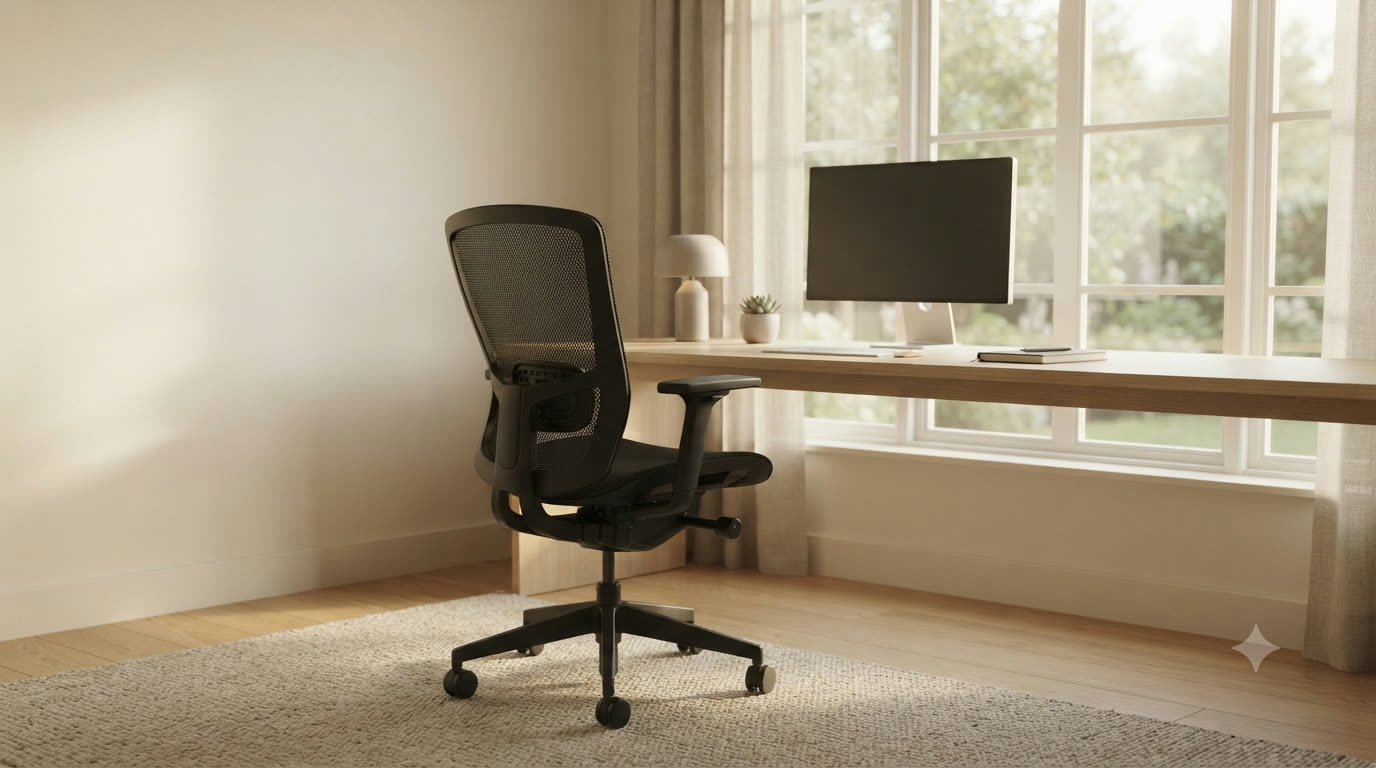
In the $100–500 band, the specs that actually decide a chair are the tilt mechanism (a real synchro-tilt reclines back and seat in a coordinated ratio; a basic tilt-lock just rocks and locks), lumbar type (height- and depth-adjustable beats a fixed "lumbar pillow"), seat-depth adjustment (the most-skipped spec, and the one tall or short sitters need most), mesh vs foam (airflow vs cushion), cylinder class (Class 4 is the sturdier grade), and warranty length — the single most honest durability signal. The best all-round pick near the top of the band is the Steelcase Series 1; the best proven mid-tier task chair is the HON Ignition 2.0; the best value is the Sihoo M18. Ignore any "rated for 8 hours" claim — it isn't a real spec.
The one thing to know: Warranty length is the single most honest quality signal a chair maker gives you, because they're the ones betting on how long it lasts. Contract brands back chairs for many years — Steelcase's limited warranty runs up to 12 years — while typical budget chairs carry a 1-to-3-year limited warranty. A long warranty signals the maker expects the mechanism, cylinder, and frame to survive daily 8-hour use; a short one is a quiet admission of the opposite. Always read what the warranty actually covers (frame vs mechanism vs upholstery) and for how long.
Our picks — by role and tier band, not by hype
Research-based picks (how we evaluate), built from manufacturer specifications and chair engineering rather than a scoring rubric. Live Amazon search links, no product prices or star ratings, and one honest drawback on every chair. Weight capacities are stated as the manufacturer rating. We only list chairs actually sold on Amazon US in the roughly $100–500 band.
Steelcase Series 1
Mesh back · integrated LiveBack recline with adjustable tension · optional adjustable lumbar · optional seat-depth adjustment · height-adjustable arms (4D optional) · Class 4 gas cylinder · manufacturer weight rating up to 400 lb · up to 12-year limited warranty
The warranty tells the story: a contract-grade chair with an up-to-12-year limited warranty, a real weight-activated recline mechanism, and Steelcase's parts/service network — the clearest example of warranty length as a durability signal in this band.
Best for: Buyers who want a genuine contract-furniture chair and are willing to spend near the top of the band for long-term durability
Watch out: It is bare at base price — adjustable lumbar, 4D arms, and seat-depth adjustment are often paid add-ons, and a fully-optioned Series 1 can push past $500 and out of this band. Confirm exactly which adjustments your chosen configuration includes before buying.
Check price on AmazonNot deciding today? Add it to your cart over there — Amazon keeps it saved (and flags any price change) until you're ready.
HON Ignition 2.0
Mesh back · synchro-tilt with tension + multi-position tilt-lock · adjustable lumbar · adjustable arms (2D/4D by trim) · optional seat-depth adjustment on some trims · Class 4 cylinder · manufacturer weight rating up to 300 lb · limited warranty (strong on many components)
A contract-office staple that brings a true synchro-tilt mechanism, adjustable lumbar, and a strong component warranty at a mid-band price — the specs that separate a real task chair from a listicle special.
Best for: Home-office buyers who want a proven commercial-grade task chair with a synchro-tilt recline
Watch out: Trims vary a lot: the base model has simpler arms and no seat-depth adjustment, and the exact warranty terms differ by component and configuration. Verify the specific trim's adjustments and warranty on the current Amazon listing.
Check price on AmazonNot deciding today? Add it to your cart over there — Amazon keeps it saved (and flags any price change) until you're ready.
Branch Ergonomic Chair (Verve line also)
Mesh back · synchro-style tilt with multi-position tilt-lock · adjustable lumbar · adjustable arms (up to 4D on some configs) · Class 4 cylinder · manufacturer weight rating up to 275 lb · 7-year warranty
A direct-to-consumer favorite with a clean 7-year warranty, multi-position tilt-lock, and adjustable lumbar — a well-specced mid-band chair that avoids the fake-review noise of the category.
Best for: Buyers who want a straightforward, honestly-specced mid-tier chair with a multi-year warranty
Watch out: The manufacturer weight rating (up to 275 lb) is lower than several rivals in the band, and Amazon availability of specific Branch models can be intermittent versus buying direct. Check the current listing and rating before ordering.
Check price on AmazonNot deciding today? Add it to your cart over there — Amazon keeps it saved (and flags any price change) until you're ready.
Autonomous ErgoChair Pro
Mesh back · reclining tilt with multiple lock positions + tension · adjustable lumbar · adjustable headrest · adjustable arms · seat-depth adjustment on Pro trim · Class 4 cylinder · manufacturer weight rating up to 300 lb · limited warranty (commonly ~2 years)
One of the few chairs in the band bundling adjustable lumbar, adjustable headrest, and seat-depth adjustment together — a lot of adjustment points for the money if you want to fine-tune fit.
Best for: Taller or fit-particular buyers who want a headrest plus seat-depth adjustment without leaving the mid band
Watch out: The warranty is shorter than the contract-brand picks (commonly around 2 years), and assembly is more involved than average — plan for a longer build. Confirm the trim (Core vs Pro) since adjustments differ.
Check price on AmazonNot deciding today? Add it to your cart over there — Amazon keeps it saved (and flags any price change) until you're ready.
Sihoo Doro C300
Mesh back · reclining tilt with lock positions · self-adjusting / dynamic lumbar support · adjustable arms (up to 4D on some trims) · adjustable headrest · Class 4 cylinder · manufacturer weight rating up to 300 lb · limited warranty
Brings a dynamic (self-adjusting) lumbar system and up-to-4D arms into the mid band — a feature set that reads like a much pricier chair on the spec sheet.
Best for: Buyers who want a lot of adjustment and a dynamic lumbar system at a sub-$350 price
Watch out: A 'self-adjusting' or 'dynamic' lumbar is a spring-loaded follower, not the same as an independently height-and-depth-adjustable lumbar — it moves with you but you can't dial in a fixed position. Model names (C300/S300/M-series) overlap; verify the exact SKU.
Check price on AmazonNot deciding today? Add it to your cart over there — Amazon keeps it saved (and flags any price change) until you're ready.
FlexiSpot C7
Mesh or upholstered back (by trim) · synchro-tilt with multi-position lock · adjustable lumbar · 4D adjustable arms · seat-depth adjustment · adjustable headrest (some trims) · Class 4 cylinder · manufacturer weight rating up to 300 lb · limited warranty
Hits the full adjustability checklist for the band — synchro-tilt, 4D arms, adjustable lumbar, and seat-depth adjustment — which makes it one of the easiest chairs here to fit to an individual body.
Best for: Buyers who specifically want seat-depth adjustment and 4D arms without going premium
Watch out: The many mechanisms mean a longer, fiddlier assembly, and trims differ (mesh vs upholstered, headrest or not). Confirm the exact configuration's adjustments on the current listing.
Check price on AmazonNot deciding today? Add it to your cart over there — Amazon keeps it saved (and flags any price change) until you're ready.
Sihoo M18
Mesh back · tilt with rock/tilt-lock (rock-back tension) · basic adjustable lumbar · flip-up or fixed arms (by trim) · adjustable headrest · Class 3 cylinder (typical at this price) · manufacturer weight rating up to 300 lb · limited warranty (typically shorter, ~1 year class)
The value benchmark: a mesh task chair with a headrest and an adjustable lumbar knob at an entry price, widely available and one of the most-shipped chairs in the band.
Best for: First-time buyers who want a mesh chair with basic adjustment on a tight budget
Watch out: This is a tilt-lock (rock-and-lock) chair, not a synchro-tilt — the seat and back don't recline in a coordinated ratio. Arms are often flip-up (up/down only, not 4D), the cylinder is typically a lower class, and the warranty is short. Fine for the price; not a contract-grade chair.
Check price on AmazonNot deciding today? Add it to your cart over there — Amazon keeps it saved (and flags any price change) until you're ready.
Staples Hyken Mesh Task Chair
Mesh back and seat · tilt-tension with tilt-lock · adjustable headrest · height-adjustable arms (limited range) · Class 3 cylinder (typical) · manufacturer weight rating up to 250 lb · limited warranty
A long-running budget mesh chair with a headrest and full-mesh breathability — a known quantity that has sold for years, which is itself a mild reliability signal at this price.
Best for: Budget buyers who prioritize a breathable all-mesh seat and back with a headrest
Watch out: Arm and lumbar adjustment are limited compared with pricier picks, the manufacturer weight rating (up to 250 lb) is the lowest here, and the all-mesh seat is firmer/less cushioned than a foam seat — a breathability-vs-cushion tradeoff. It's a tilt-lock, not synchro-tilt.
Check price on AmazonNot deciding today? Add it to your cart over there — Amazon keeps it saved (and flags any price change) until you're ready.
Hbada P5 / E2 Series
Mesh back · tilt with lock positions + tension · adjustable lumbar (basic) · flip-up arms (common) · adjustable headrest (some trims) · Class 3 cylinder (typical) · manufacturer weight rating up to 300 lb · limited warranty (shorter, budget-tier)
A widely-sold budget mesh chair with flip-up arms (handy for tucking under a desk) and a basic adjustable lumbar — competent adjustment for the entry price.
Best for: Budget buyers who want flip-up arms and a mesh back for a small home-office setup
Watch out: Flip-up arms move up/down only (not 4D), the lumbar is a simple fixed-curve or basic-adjust design rather than height-and-depth adjustable, and the warranty is short. Model naming (P5/E2 and variants) overlaps — verify the exact SKU and its listed adjustments.
Check price on AmazonNot deciding today? Add it to your cart over there — Amazon keeps it saved (and flags any price change) until you're ready.
Compare the specs that matter
Not the color options or the "8-hour" copy — the six specs that decide how a chair reclines, fits, breathes, and lasts.
| Feature | Steelcase Series 1 | HON Ignition 2.0 | Branch Ergonomic | Autonomous ErgoChair Pro | Sihoo Doro C300 | FlexiSpot C7 | Sihoo M18 | Staples Hyken |
|---|---|---|---|---|---|---|---|---|
| Tier band | $400–500 | $300–450 | $300–350 | $300–400 | $250–350 | $300–400 | $100–200 | $150–200 |
| Tilt mechanism | Weight-activated recline | Synchro-tilt | Multi-lock tilt | Multi-lock recline | Recline w/ locks | Synchro-tilt | Tilt-lock (rock) | Tilt-lock |
| Lumbar type | Adjustable (optional) | Adjustable | Adjustable | Adjustable | Dynamic/self-adj | Adjustable | Basic adjustable | Limited |
| Seat-depth adj. | Optional | Some trims | No | Yes (Pro) | No | Yes | No | No |
| Back material | Mesh back | Mesh back | Mesh back | Mesh back | Mesh back | Mesh/upholstered | Mesh back | All-mesh |
| Warranty | Up to 12 yr | Strong (varies) | 7 yr | ~2 yr | Limited | Limited | Short | Limited |
How to choose — decode the claim, then buy
"Adjustable lumbar" vs a lumbar pillow
"Adjustable lumbar" and a "lumbar pillow" are not the same thing. Genuine adjustable lumbar support moves up and down (height) and often in and out (depth) so you can position the support where your lower back actually curves; a strapped-on or built-in "lumbar pillow" is a fixed cushion you can't reposition. A step below both is a "dynamic" or "self-adjusting" lumbar — a spring-loaded follower that moves with you but can't be locked to a chosen spot. On a spec sheet, look for the words height-adjustable and depth-adjustable, not just the word lumbar. Full breakdown →
Synchro-tilt vs tilt-lock
Synchro-tilt and tilt-lock are different recline mechanisms. A basic tilt (or tilt-lock) rocks the whole seat-and-back as one unit and lets you lock it at a fixed angle. A synchro-tilt reclines the backrest and seat in a coordinated ratio (commonly around 2:1 — the back leans more than the seat) so your feet stay planted and your posture opens as you lean. Synchro-tilt is the more sophisticated mechanism and is one of the clearest dividing lines between a real task chair and a budget rocker; the word 'tilt' alone in a listing usually means the simpler kind. Mechanisms decoded →
Seat-depth is the most-skipped spec
Seat-depth adjustment is the most-skipped spec, and it matters more than most buyers realize. It slides the seat pan forward or back so you can set the gap between the front edge of the seat and the back of your knees for your leg length. Too deep and short-legged sitters perch forward, losing the backrest; too shallow and tall sitters get no thigh support. Many mid-tier chairs omit it entirely — so if you're notably tall or short, treat seat-depth adjustment as a primary filter, not a bonus. Why it matters →
Mesh vs foam is a tradeoff
Mesh versus foam is a breathability-versus-cushion tradeoff, not a quality ranking. A mesh seat and back run cooler because air passes through, and mesh can't compress and 'bottom out' the way foam can — but an all-mesh seat is firmer and some sitters find the front edge sharp. Molded-foam seats feel more cushioned initially but the foam gradually loses resilience (compression set) over years of daily use, which is a real long-term wear factor. Many chairs split the difference: mesh back for airflow, foam seat for cushion. Mesh vs foam →
Warranty length is the real quality signal
Warranty length is the single most honest quality signal a chair maker gives you, because they're the ones betting on how long it lasts. Contract brands back chairs for many years — Steelcase's limited warranty runs up to 12 years — while typical budget chairs carry a 1-to-3-year limited warranty. A long warranty signals the maker expects the mechanism, cylinder, and frame to survive daily 8-hour use; a short one is a quiet admission of the opposite. Always read what the warranty actually covers (frame vs mechanism vs upholstery) and for how long. Warranty decoder →
"Rated for 8 hours" is marketing
"Rated for 8 hours" or "8+ hour ergonomic" is a marketing phrase with no standardized meaning — there is no test that certifies a chair for a number of hours per day. What actually determines whether a chair suits long sitting is its adjustability (can you fit it to your body?) and the durability of its mechanism, cylinder, and materials. Treat an hours-per-day claim as copy, not a spec, and judge the chair by its adjustment points and warranty instead. Do pricier chairs last? →
Answers to specific buyer questions
Decode the claims first
Frequently Asked Questions
Not the RGB-adjacent marketing — it's a handful of specs. Look for a genuine tilt mechanism (synchro-tilt reclines the back and seat in a coordinated ratio, versus a basic rock-and-lock tilt), a height- and depth-adjustable lumbar rather than a fixed 'lumbar pillow,' seat-depth adjustment if you're tall or short, a Class 4 gas cylinder, and — the most honest signal — a longer warranty. Contract brands back chairs for many years; budget chairs typically carry 1–3 years.
It's a tradeoff, not a ranking. Mesh runs cooler because air passes through and it can't compress and bottom out the way foam does, but an all-mesh seat is firmer and some people find the front edge sharp. Foam feels more cushioned at first but gradually loses resilience over years of daily use. Many chairs use a mesh back for airflow and a foam seat for cushion, which is a reasonable middle ground.
Genuine adjustable lumbar support moves up and down (height) and often in and out (depth), so you can place the support where your lower back curves. That is different from a fixed 'lumbar pillow' you can't reposition, and different again from a 'dynamic' or 'self-adjusting' lumbar, which is a spring-loaded follower that moves with you but can't be locked to a spot. On the spec sheet, look for the words height-adjustable and depth-adjustable, not just 'lumbar.'
No — there's no standardized test that certifies a chair for a number of hours per day, so an '8+ hour ergonomic' claim is marketing copy, not a spec. What actually matters for long sitting is adjustability (can you fit it to your body?) and the durability of the mechanism, cylinder, and materials. Judge a chair by its adjustment points, cylinder class, and warranty length instead of an hours claim.
Often, and the warranty is the tell. Makers set warranty length based on how long they expect the mechanism, cylinder, and frame to survive daily use — a chair backed for many years is a different durability bet than one backed for one. Price also usually buys a higher-class gas cylinder and a real synchro-tilt mechanism. That said, a well-specced mid-tier chair with a Class 4 cylinder and a multi-year warranty can outlast a poorly-built pricier one; read the specs, not just the price.
More than most buyers realize, especially if you're notably tall or short. Seat-depth adjustment slides the seat pan forward or back to set the gap between the seat's front edge and the back of your knees. Too deep and shorter sitters perch forward and lose the backrest; too shallow and taller sitters get no thigh support. Many mid-tier chairs skip it, so if your leg length is outside average, treat it as a primary filter.
How we work
We're a research-based site: we analyze manufacturer specifications and chair engineering — adjustability points, lumbar and tilt mechanisms, seat-depth range, materials, cylinder class, and warranty terms — rather than lab-testing every chair. We explain tradeoffs plainly, always name a downside, and report measurable specs — never a promise about comfort, posture, or health. Read our full methodology →